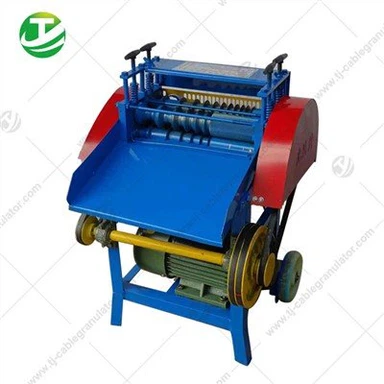
What Are The Maintenance Methods Of Copper Granulator?
Aug 19, 2024
1. Daily maintenance
1. Cleaning equipment:
After each use, various parts of the copper granulator should be cleaned in time, including the feed port, discharge port, mold, screw, etc. Use a clean rag or brush to remove residual copper material and dust to prevent accumulation from affecting the performance of the equipment.
For parts that are difficult to clean, appropriate cleaning agents can be used, but be careful to avoid using highly corrosive chemicals to avoid damaging the surface of the equipment.
2. Check fasteners:
Regularly check the fasteners of the equipment, such as bolts, nuts, screws, etc., to ensure that they are in a tight state. Loose fasteners may cause unstable operation of the equipment and even cause failures.
If the fasteners are found to be loose, they should be tightened in time. During the tightening process, pay attention to moderate force to avoid over-tightening or over-loosening.
3. Lubricating parts:
The transmission parts of the equipment, such as gears, bearings, chains, etc., should be lubricated regularly. Choose appropriate lubricating oil or grease and fill it according to the requirements of the equipment manual.
Lubrication can reduce friction between parts, reduce wear and extend the service life of the equipment. At the same time, be careful to avoid excessive lubricating oil or grease to avoid contamination.
2. Regular maintenance
1. Check the electrical system:
Regularly check the electrical system of the copper granulator, including the motor, controller, wires, etc. Check the operation of the motor to see if there is abnormal noise, heating, etc.
Check whether the controller functions normally and whether the buttons and switches are sensitive and reliable. Check whether the wires are damaged, aged, etc. If there are any problems, they should be replaced in time.
2. Check the heating system:
Check whether the heating elements of the heating system, such as heating rods, heating rings, etc., are working properly. Check whether the heating temperature is uniform and whether it reaches the set temperature.
Clean the carbon deposits and impurities on the heating elements regularly to ensure the heating effect. At the same time, check whether the connection lines of the heating system are loose or damaged, and repair or replace them in time.
3. Check the mold and screw:
Regularly check the wear of the mold and screw. If the mold or screw is found to be worn, it should be repaired or replaced in time. Severely worn molds and screws will affect product quality and production efficiency.
When replacing molds and screws, pay attention to choosing the appropriate model and specification to ensure that they match the equipment. At the same time, it is necessary to install it according to the correct installation method to avoid equipment failure caused by improper installation.
4. Maintain the hydraulic system:
For copper granulators with hydraulic systems, the quality and level of the hydraulic oil should be checked regularly. If the hydraulic oil deteriorates or the level is too low, the hydraulic oil should be replaced or added in time.
Check whether there are leaks in the pipes, joints, valves and other parts of the hydraulic system. If there is a leak, repair or replace the seal in time.
Clean the filter of the hydraulic system regularly to prevent impurities from entering the hydraulic system and affecting the normal operation of the equipment.
3. Long-term outage maintenance
1. Cleaning and rust prevention:
If the copper granulator is out of service for a long time, it should be thoroughly cleaned and rust-proofed before it is out of service. Clean all parts of the equipment, and then apply anti-rust oil or anti-rust agent to prevent the equipment from rusting.
2. Covering and protection:
Cover the equipment with plastic cloth or other coverings to avoid erosion of dust, moisture, etc. At the same time, the equipment should be placed in a dry and well-ventilated place to avoid direct sunlight and rain.
3. Regular inspection:
During long-term outage, the equipment should be inspected regularly. Check the appearance of the equipment for damage, loose or missing parts, etc. If any problems are found, they should be dealt with in a timely manner.