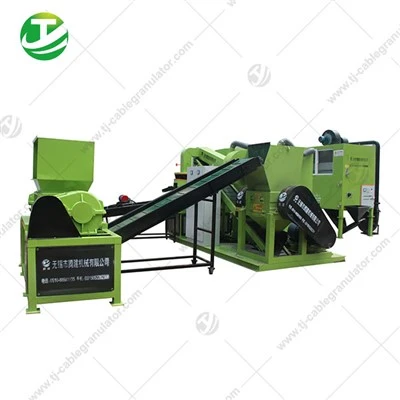
What Are The Common Malfunctions Of Copper Wire Recycling Machines?
Jan 26, 2026
I. Mechanical Malfunctions
Wear Malfunctions: Prolonged operation and friction in components such as gears, bearings, and blades can increase clearances, affecting transmission accuracy and separation performance.
Solution: Regularly inspect and replace easily worn parts, such as blades (recommended replacement every 500 hours).
Deformation and Fracture Malfunctions: Overload or foreign objects may cause the main shaft or frame to bend or break.
Prevention: Avoid overloading and ensure uniform feeding.
Belt Misalignment or Damage: Uneven tension or improper installation can cause belt misalignment.
Solution: Adjust tension or replace the belt.
II. Electrical Malfunctions
Short Circuit/Open Circuit Malfunctions: Vibration, moisture, or animal chewing can damage wiring.
Solution: Check wiring insulation and repair or replace as needed.
Damaged Electrical Components: Motors, sensors, etc., may be damaged due to overheating, overload, or quality issues.
Solution: Check component condition and replace damaged parts.
Control and Power Supply Failures: Unstable voltage, blown fuses, or control circuit malfunctions may prevent equipment from starting or cause abnormal operation.
Solution: Check the power supply voltage, fuses, and control circuitry.
III. Failures Caused by Improper Operation and Maintenance:
Uneven Feeding or Overloading: This can lead to blockages, material jamming, or motor overload.
Solution: Ensure even feeding and avoid overloading.
Cooling System Problems: A clogged radiator or improper coolant addition may cause engine overheating.
Solution: Clean the radiator regularly and add coolant correctly.
Insufficient Dust Collection System Maintenance: A clogged baghouse dust collector reduces dust collection efficiency and increases the risk of dust explosions. Solution: Clean or replace the filter bags regularly.
IV. Other Common Failures:
Excessive Noise: Worn parts, increased gaps, or loose connections may cause increased noise.
Solution: Check and tighten loose parts, and replace worn parts.
Poor separation effect: Insufficient magnetic field strength (for magnetic separators), excessive material flow rate, or improper equipment parameter settings may lead to poor separation.
Solution: Adjust equipment parameters and check the magnetic material.
Troubleshooting and Prevention Recommendations
Establish a preventative maintenance plan: Regularly inspect, lubricate, and replace vulnerable parts.
Standardized operation training: Ensure operators are familiar with equipment operating procedures.
Equip with professional tools: Prepare tools such as voltmeters and megohmmeters for electrical testing.
Pay attention to environmental factors: Keep the environment around the equipment dry and clean, and prevent debris from entering the equipment.