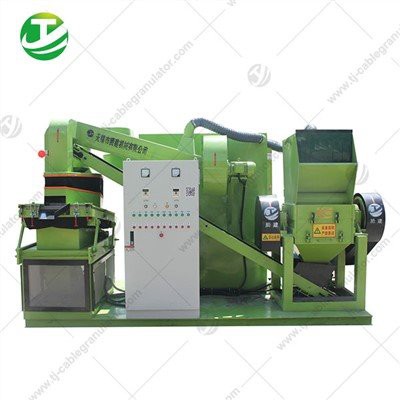
How To Operate A Copper Granulator Machine Safely?
Feb 11, 2026
I. Safety Preparations Before Operation
1. Personal Protective Equipment (PPE): Anti-static work clothes, safety shoes, goggles, and protective gloves must be worn. Long hair must be tucked into a work cap. Jewelry and loose clothing are prohibited.
2. Equipment and Environmental Inspection:
Confirm that the equipment is properly grounded. Check that the transmission parts are lubricated, protective covers are complete, and all anchor bolts are tightened.
Clean the work area, ensuring the ground is dry, free of debris, and that passageways are unobstructed. Emergency fire-fighting facilities (such as fire extinguishers) should be available.
Use wet cleaning to avoid dust generation and eliminate static electricity from the body using an electrostatic discharge device.
3. Raw Material and Parameter Confirmation:
Check that the copper raw material is dry, clean, and free of impurities or lumps. Set the barrel temperature, screw speed, and cutting frequency according to process requirements, and confirm that the cooling system is operating normally.
II. Safety Procedures During Operation
1. Start-up and Operation:
Run the machine unloaded for 3-5 minutes to ensure there are no abnormal noises before adding material.
Adopt the principle of "low-speed start-up and slow feeding," closely monitor the main unit's current, temperature, and pressure to avoid overloading.
It is strictly forbidden to put hands or tools into the feeding port, machine head, or other rotating parts while the equipment is running. Cleaning must be done after the machine is stopped, using copper tools.
2. Process Monitoring: Operators must not leave their posts without authorization and must continuously observe the equipment status. If abnormal noises, current fluctuations, or abnormal temperatures are detected, stop the machine immediately.
Regularly check the condition of the screen and cutter to prevent blockages or particle adhesion affecting the output.
3. Emergency Handling: In case of malfunction, immediately press the emergency stop button to cut off the power supply and notify maintenance personnel.
In case of material splashing or fire, quickly use a fire extinguisher to extinguish the fire and evacuate personnel.
III. Safe Operation After Shutdown
1. Normal Shutdown: First, stop feeding, empty the remaining material in the barrel, and then sequentially shut down the heating system, main motor, cooling water, and auxiliary equipment.
2. Cleaning and Maintenance: After shutdown, use a copper scraper or brush to clean the barrel, screw, and die head. Do not use steel or other hard tools to avoid damaging the equipment.
Clean the site, return tools to their proper places, lock the equipment, and hang a "Do Not Start" sign.
3. Recording and Reporting: Record in detail the operating parameters, any abnormal situations, and handling measures for subsequent maintenance and problem tracing.
IV. Key Safety Red Lines
1. Overloading and unauthorized changes to process parameters are strictly prohibited.
2. Maintenance, cleaning, or adjustments are strictly prohibited while the equipment is running.
3. Water or easily conductive liquids are strictly prohibited from cleaning electrical components.
4. The effectiveness of protective devices, electrical wiring, and safety devices must be checked regularly.