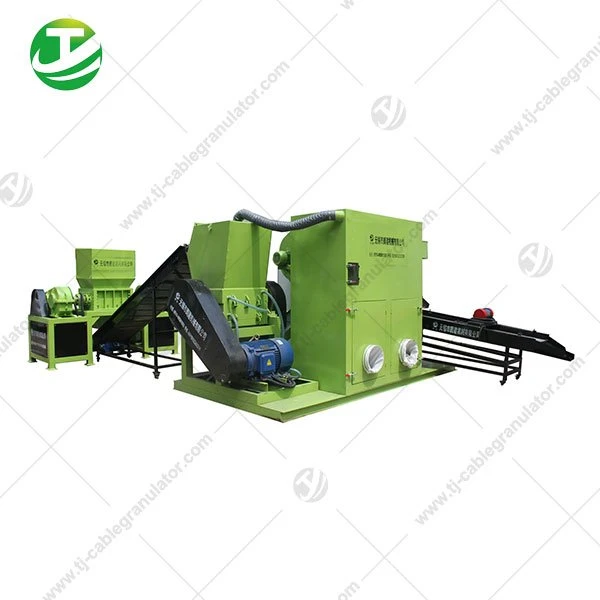
What is the separation effect of a copper separating machine on fine - grained copper materials?
Jul 20, 2026
In the realm of metal recycling and mining, the efficient separation of fine - grained copper materials is of paramount importance. As a supplier of copper separating machines, I have witnessed firsthand the impact these machines can have on the recovery and purification of copper. In this blog, we will delve into the separation effect of a copper separating machine on fine - grained copper materials, exploring the underlying principles, influencing factors, and real - world applications.
Principles of Separation
Copper separating machines operate based on various physical and chemical principles to separate copper from other materials in fine - grained mixtures. One of the most common methods is based on the difference in density. Copper has a relatively high density compared to many other substances commonly found in fine - grained materials, such as plastics, rubber, and other non - metallic impurities.
Gravity separation is a fundamental technique used in copper separating machines. By subjecting the fine - grained copper materials to a gravitational field, the heavier copper particles will settle at a faster rate than the lighter non - metallic particles. This allows for the initial separation of copper from the mixture. For example, in a shaking table, the fine - grained material is fed onto a sloping table that vibrates. As the table shakes, the heavier copper particles move down the slope more quickly, while the lighter non - metallic particles are carried away by the flowing water or the vibration of the table.
Another important principle is magnetic separation. Although copper is not magnetic, some of the impurities in the fine - grained materials may be magnetic. By using a magnetic field, these magnetic impurities can be removed from the mixture, leaving behind a more concentrated copper fraction. This is particularly useful in cases where the fine - grained copper materials are contaminated with iron or other magnetic metals.
Electrostatic separation is also employed in some copper separating machines. This method takes advantage of the difference in electrical conductivity between copper and non - metallic materials. When the fine - grained materials are passed through an electrostatic field, the conductive copper particles will be attracted to one electrode, while the non - conductive non - metallic particles will be repelled or attracted to the opposite electrode.
Factors Influencing Separation Effect
Several factors can significantly influence the separation effect of a copper separating machine on fine - grained copper materials.
Particle Size
The size of the fine - grained copper particles plays a crucial role in the separation process. Smaller particles are more difficult to separate because they have a larger surface - to - volume ratio, which can lead to increased adhesion between particles and a greater tendency to form aggregates. In addition, smaller particles may be more easily carried away by the fluid or gas used in the separation process. Therefore, it is often necessary to pre - treat the fine - grained materials to ensure that the particle size is within an appropriate range for efficient separation.
Composition of the Mixture
The composition of the fine - grained copper materials also affects the separation effect. If the mixture contains a high proportion of impurities that are similar in density, magnetic properties, or electrical conductivity to copper, it will be more challenging to achieve a high - quality separation. For example, if the fine - grained materials contain a significant amount of brass (an alloy of copper and zinc), which has similar density and electrical conductivity to copper, it may be necessary to use more advanced separation techniques or multiple separation steps to separate the copper from the brass.
Operating Conditions
The operating conditions of the copper separating machine, such as the flow rate of the feed material, the strength of the magnetic field (in magnetic separation), the voltage of the electrostatic field (in electrostatic separation), and the vibration frequency (in gravity separation), can all have a significant impact on the separation effect. Optimal operating conditions need to be determined through experimentation and adjustment to ensure the best possible separation efficiency.
Real - World Applications
The separation of fine - grained copper materials has a wide range of real - world applications, including metal recycling and mining.
Metal Recycling
In the metal recycling industry, copper separating machines are used to recover copper from scrap copper wires and other copper - containing waste materials. For example, Scrap Copper Wire Granulator and Copper Wire Granulator are often used to break down scrap copper wires into fine - grained particles. Then, the copper separating machine can be used to separate the copper from the plastic insulation and other non - metallic components. This not only helps to recover valuable copper resources but also reduces the environmental impact of waste disposal.
Mining
In the mining industry, copper separating machines are used to extract copper from low - grade ores. Fine - grained copper ores often contain a large amount of gangue (non - valuable minerals). By using copper separating machines, the copper can be separated from the gangue, increasing the copper grade of the ore and making it more economically viable to process. Small Copper Wire Granulator Machine can also be used in small - scale mining operations to process copper - containing materials efficiently.
Achieving High - Quality Separation
To achieve a high - quality separation effect of fine - grained copper materials, it is essential to choose the right copper separating machine and optimize its operating conditions. Our company offers a wide range of copper separating machines, each designed to meet the specific needs of different applications.
Our machines are equipped with advanced technology and high - quality components to ensure reliable and efficient operation. For example, our magnetic separators use powerful magnets to effectively remove magnetic impurities from the fine - grained copper materials. Our electrostatic separators are designed with precise voltage control to achieve a high - precision separation of copper and non - metallic materials.
In addition, we provide comprehensive technical support and after - sales service to help our customers optimize the operation of their copper separating machines. Our team of experts can assist in the selection of the appropriate machine, the adjustment of operating parameters, and the troubleshooting of any problems that may arise.
Conclusion
The separation effect of a copper separating machine on fine - grained copper materials is influenced by various factors, including the separation principles, particle size, composition of the mixture, and operating conditions. By understanding these factors and choosing the right copper separating machine, it is possible to achieve a high - quality separation of copper from other materials in fine - grained mixtures.
Whether you are in the metal recycling industry or the mining industry, our copper separating machines can provide you with an efficient and reliable solution for the separation of fine - grained copper materials. If you are interested in learning more about our products or have any questions regarding the separation of fine - grained copper materials, please do not hesitate to contact us for further discussion and potential procurement.