

Can a wire granulator machine be used for recycling multi - core wires?
Nov 16, 2026
If you've spent any time in the e-waste or scrap wire processing space, you've probably encountered multi-core wires-those thick, bulky cables that hold two or more insulated conductors inside a single outer jacket, often used in power distribution, construction, or industrial machinery. For anyone looking to recycle these wires profitably, the big question always comes up: can a standard wire granulator machine handle multi-core wires? As someone who's been supplying wire granulation equipment for over a decade, I've fielded this question hundreds of times, and the short answer is yes-but it depends on choosing the right machine setup and understanding how multi-core wires differ from the single-strand or thin single-core cables most people are used to processing.
Let's start with the basics: what makes multi-core wires tricky for recycling, and what a wire granulator does at its core. A wire granulator works by shredding cables into small, uniform granules, then separating the metal (usually copper or aluminum) from the plastic insulation via gravity separation, electrostatic sorting, or air classification. The whole process is dry-no water needed, which cuts down on disposal costs and environmental impact compared to older wet recycling methods. For single-core wires, this process is straightforward: you strip, feed, shred, sort, and you're done. Multi-core wires, though, add a layer of complexity because their inner conductors are often tightly bundled, sometimes with different gauges mixed, and the outer jacket is usually thicker and more robust than the insulation on small single-core wires.
I've seen customers try to run thick multi-core power cables through the wrong machines, and the results are messy: half-shredded wires that clog the granulator's blades, insulation still stuck to metal granules, and lost metal that could have been recycled. That's why the key isn't whether a wire granulator can process multi-core wires-it's which type of wire granulator you choose, and how you set it up to handle the unique properties of multi-core cables.
Take, for example, small multi-core wires like the ones used in residential building wiring, which have 2 to 4 inner copper conductors wrapped in PVC insulation. These are perfect for a compact, entry-level unit like the Small Copper Wire Granulator Machine. It's designed to process thin to medium-gauge cables, including small multi-core sets, with sharp, adjustable blades that can cleanly cut through the outer PVC jacket without tangling the inner conductors. I had a customer in Detroit, a small scrap yard that works mostly with residential construction waste, who was manually stripping multi-core Romex wires before they invested in this small granulator. Now they feed a whole bin of Romex, turn it on, and in 15 minutes they have separate copper and plastic granules ready for sale. The blades are easy to replace, too, which is a win for small operations that don't have a full maintenance team.
But what about larger, industrial multi-core wires-think 10+ conductor cables used in manufacturing plants, or thick multi-core power cables from old utility lines? These need a more heavy-duty setup, which is where an Automatic Scrap Copper Wire Granulator comes in. This model has a two-stage shredding process: first a primary shredder that breaks down the thick outer jacket and cuts the bulk cable into manageable chunks, then a secondary granulator that crushes the chunks into fine granules. The automated feeding system is a game-changer here because it prevents jams from large, tangled multi-core bundles. I worked with a recycling company in Houston that processes tons of industrial multi-core wires every month; before they got the automatic model, they were dealing with 2-3 jam repairs a day on their old manual feeder. Now they run 8-hour shifts with almost no downtime, and their metal recovery rate jumped from 92% to 98% because the two-stage process separates the inner conductors much more thoroughly than a single-shred setup.
One of the most common mistakes I see is customers trying to use a generic waste recycling machine for multi-core wires. A lot of scrap yards will buy a cheap general shredder that handles wood, metal, and plastic, then hope it works for wires. It doesn't. The issue is that generic shredders are designed to process mixed materials, so they don't have the precision to separate copper from plastic effectively. That's why investing in a dedicated Waste Copper Wire Recycling Machine is worth it-these machines are calibrated specifically for cables, with optimized rotor speeds and air classifier settings that separate light plastic insulation from dense copper granules. For multi-core wires, in particular, this specificity matters because the inner conductors are often closely packed; a generic shredder might leave small pieces of plastic stuck to copper granules, lowering the value of your recycled metal.
Let's talk about the science behind why this works, just to be clear. When you process multi-core wires with a proper wire granulator, the first step is shredding the cable into particles smaller than the inner conductor diameter. For copper, which is denser than PVC insulation, the next step uses gravity separation: the mixed granules fall through an air stream, and the heavier copper drops to the bottom while lighter plastic gets carried away. With multi-core wires, because the inner conductors are uniform in density (unlike mixed metals), this separation is even more efficient. The key is that the granulator doesn't just shred randomly-it produces consistent-sized granules that make separation easy. That's why so many of our clients report higher metal yields when they switch to a dedicated Copper Wire Granulator Machine for their multi-core wire waste.

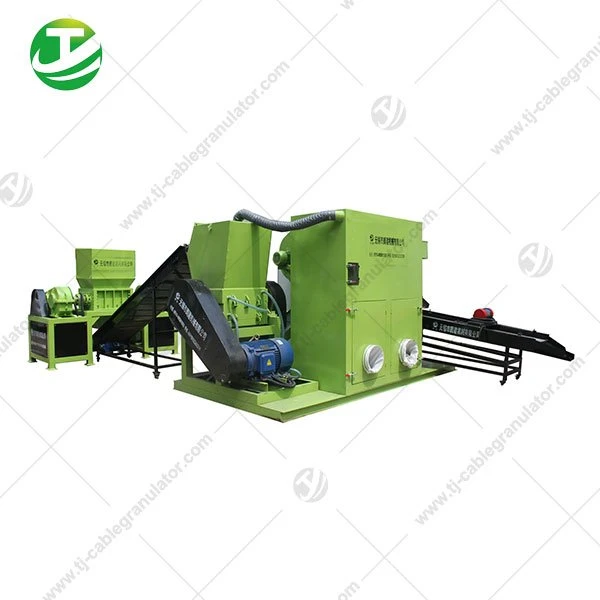
I should also mention the flexibility of these machines, because not all multi-core wires are the same. Some have aluminum conductors instead of copper, some have cross-linked polyethylene (XLPE) insulation that's tougher than PVC, and some have mixed gauges of inner conductors. A quality copper wire granulator can be adjusted for all these variables: rotor speed can be slowed for thick XLPE-jacketed multi-core wires to prevent blade wear, the air flow in the separator can be tweaked to handle lighter aluminum granules, and screen sizes can be changed to match the diameter of the inner conductors. Last year, a customer in Canada who processes old telecommunications multi-core cables (which have a mix of copper and aluminum conductors) came to us after struggling with inconsistent separation. We adjusted the screen size on their Copper Wire Granulator to match the smaller inner conductor diameter, and they now get 99% pure metal from their telecom multi-core waste-something they couldn't do with their old machine.
Of course, there are a few caveats to keep in mind. First, prepping your multi-core wires a little can make the process even smoother. If your wires are extra long, cutting them into 1-2 foot sections before feeding them into the granulator will reduce the chance of tangling, especially with thin small multi-core wires. You don't need to strip them, just cut them down to manageable lengths. Second, regular maintenance is key-sharp blades and a clean separator will keep your machine running efficiently, and that's true for processing single-core or multi-core wires alike.
Now, if you're in the market for a wire granulator to process multi-core wires, you might be wondering which model is right for your operation. If you're a small scrap yard or a business that produces smaller volumes of multi-core wire waste (like a residential construction company, for example), the Small Copper Wire Granulator Machine is a perfect starting point. It's compact, easy to operate, and cost-effective for lower throughput needs. If you're a larger operation processing tons of industrial or utility-grade multi-core wires, the Automatic Scrap Copper Wire Granulator will handle the volume and the tough materials without sacrificing yield. And for operations that process a mix of all types of scrap wires-including multi-core, single-core, and even automotive wiring-the Waste Copper Wire Recycling Machine is versatile enough to handle it all.
At the end of the day, the answer to "can a wire granulator machine be used for recycling multi-core wires?" is a resounding yes-but only if you choose the right machine for your specific multi-core wire type and volume. I've seen too many businesses write off multi-core wire recycling because they tried the wrong equipment, and that's a missed opportunity. Multi-core wires hold a lot of valuable metal, and with the right setup, recycling them can be a profitable part of your scrap processing business.
If you're ready to explore which wire granulator is best for your multi-core wire recycling needs, you can check out our full range of copper wire granulation equipment online. Our team has helped hundreds of clients find the right setup, whether they're processing small residential multi-core wires or large industrial cable bundles, and we can walk you through throughput, yield, and maintenance needs to find a solution that fits your operation perfectly. Reach out today to learn more and get a customized quote for your multi-core wire recycling setup.